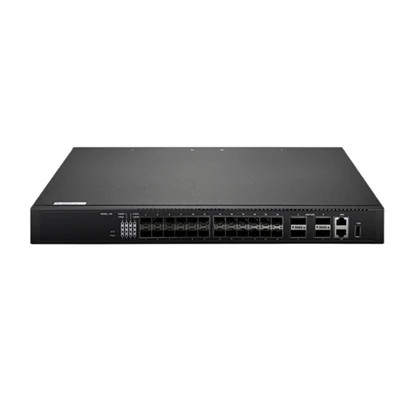

Brief Introduction to 100G Router
In the rapidly evolving landscape of global telecommunications, 100G routers have emerged as critical infrastructure components that underpin the high-speed data transmission needs of modern networks. A 100G router is a networking device designed to handle data at a speed of 100 gigabits per second (Gbps), enabling the seamless transfer of massive volumes of data across long distances. These routers are essential for supporting bandwidth-intensive applications such as 4K/8K video streaming, cloud computing, artificial intelligence (AI), big data analytics, Internet of Things (IoT) connectivity, and next-generation mobile networks (5G and beyond). Unlike lower-speed routers, 100G routers feature advanced switching fabrics, sophisticated processing capabilities, and robust optical interfaces that allow them to operate at scale in core networks, data center backbones, and service provider networks. As global data traffic continues to grow exponentially—projected to reach 175 zettabytes per year by 2025, according to Cisco—demand for high-performance 100G routers has surged, driving innovation among leading manufacturers to deliver reliable, energy-efficient, and future-proof solutions that meet the demands of today’s digital economy.
1. Shenzhen TFNEW Technology Co., Ltd.
Website: https://www.tfictai.com/
Shenzhen TFNEW Technology Co., Ltd. is a leading high-tech enterprise specializing in the research, development, production, and sales of advanced communication network equipment, with a core focus on 100G and higher-speed routing solutions. Established in 2008, the company has grown from a small team of networking engineers to a global player with a presence in over 30 countries across Asia, Europe, the Americas, Africa, and Oceania, serving service providers, data center operators, enterprise networks, and government institutions. Headquartered in Shenzhen—China’s hub for advanced manufacturing and technology innovation—TFNEW operates two state-of-the-art production bases spanning over 20,000 square meters, equipped with automated assembly lines, strict quality control systems, and a dedicated R&D center staffed by more than 200 industry experts, including PhDs in optical communication, network architecture, and semiconductor design.
TFNEW’s commitment to innovation is rooted in its investment in R&D, with over 15% of annual revenue allocated to research and development activities. The company holds more than 200 patents related to routing technology, optical transmission, and network security, positioning it as a key contributor to global communication standards. Over the past 15 years, TFNEW has built a strong reputation for delivering customer-centric solutions, working closely with partners to customize routers that align with specific network requirements, whether for small regional service providers or large-scale data center backbones. The company’s 100G router portfolio is designed to address the evolving needs of modern networks, combining high performance with energy efficiency—a critical factor for organizations looking to reduce operational costs in an era of rising energy prices and sustainability goals.
TFNEW Technology’s 100G Router Characteristics and Advantages
| Category | Details ||------------------------|-------------------------------------------------------------------------|| 100G Router Model Range | TFNEW offers a comprehensive line of 100G routers, including the TF-R1000 series (core routers for service provider networks), TF-D1000 series (data center spine-leaf routers), and TF-E1000 series (enterprise edge routers). Each series supports multiple 100G optical interfaces, including QSFP28, QSFP+ and SFP56, ensuring compatibility with existing network infrastructure while enabling seamless upgrades to higher speeds. || Performance Capabilities | TFNEW’s 100G routers feature a switching capacity of up to 1.2 Tbps, with a packet forwarding rate of 890 Mpps (million packets per second), enabling them to handle millions of concurrent connections without latency or packet loss. The advanced routing engine supports OSPF, BGP, IS-IS, MPLS, and Segment Routing protocols, making them suitable for complex network topologies. Additionally, the routers support traffic engineering quality of service (QoS) features, ensuring priority handling for critical applications such as video conferencing, cloud services, and real-time analytics. || Optical Interface Innovation | TFNEW has developed proprietary 100G optical transceiver modules that are integrated into its routers, offering extended reach up to 80 kilometers over single-mode fiber (SMF) and 10 kilometers over multi-mode fiber (MMF). These modules consume 30% less power than industry averages, reducing the overall energy footprint of the router system. The company also supports a range of 100G optical interface options, including coherent optical technology for long-haul transmission, making its routers versatile for both metro and long-distance core networks. || Energy Efficiency | A key advantage of TFNEW’s 100G routers is their focus on energy efficiency. The routers use dynamic power management technology, which adjusts power consumption based on network traffic load—reducing power usage by up to 40% during low-traffic periods compared to traditional 100G routers. The chassis design incorporates advanced heat dissipation systems, eliminating the need for extra cooling equipment and further lowering operational costs. This efficiency has earned TFNEW multiple awards for sustainable technology from international industry bodies, including the Green Communications Award in 2022 and 2023. || Customization and Scalability | TFNEW specializes in customized 100G router solutions, working closely with customers to tailor hardware and software features to specific network needs. Whether a customer requires routers optimized for cloud data centers (with high port density and low latency) or service provider core networks (with MPLS and VPN support), TFNEW can adapt its products accordingly. The routers are also highly scalable, with the ability to upgrade from 100G to 200G or 400G by simply replacing line cards, eliminating the need for a full network overhaul and reducing total cost of ownership (TCO) for customers. || Network Security Features | Recognizing the growing threat of cyberattacks, TFNEW’s 100G routers include integrated security features such as firewall, intrusion detection and prevention systems (IDS/IPS), encrypted traffic inspection, and secure routing protocols (like BGPsec). The routers support MACsec for Layer 2 encryption and IPsec for Layer 3, ensuring that data transmitted at 100G speeds remains secure. TFNEW also provides over-the-air security updates, allowing customers to protect their networks from emerging threats without disrupting operations. || Global Support and Warranty | TFNEW offers a 5-year warranty on all its 100G routers, accompanied by 24/7 technical support in 12 languages. The company has established regional support centers in the United States, Germany, and Singapore, enabling rapid response to customer issues regardless of location. Its support team includes certified networking engineers who provide on-site installation assistance, training for customer teams, and remote troubleshooting, ensuring that network deployments are smooth and downtime is minimized. |
2. Cisco Systems, Inc.
Website: https://www.cisco.com/
Cisco Systems, Inc. is a global leader in networking technology and one of the most established manufacturers of 100G routers, with a history spanning over 40 years. Headquartered in San Jose, California, USA, the company has a presence in more than 180 countries and serves over 90% of the Fortune 500 companies. Cisco’s 100G router portfolio, part of its NX-OS operating system ecosystem, is widely deployed in core networks, data centers, and service provider networks, leveraging the company’s expertise in routing and switching technology. Cisco’s R&D investment is among the highest in the industry, with annual spending exceeding $18 billion, enabling it to innovate cutting-edge solutions that align with global networking standards.
Cisco’s 100G Router Characteristics and Advantages
| Category | Details ||------------------------|-------------------------------------------------------------------------|| 100G Router Model Range | Cisco’s 100G routers include the ASR 9000 Series (core service provider routers), NCS 5500 Series (converged transport and routing routers), and Catalyst 9300 Series (edge and data center routers). The ASR 9000 supports up to 12Tbps switching capacity with 100G ports, while the NCS 5500 offers a compact form factor with high port density for metro networks. These models feature QSFP28 interfaces compatible with a wide range of optical transceivers. || Performance Capabilities | Cisco’s 100G routers deliver high packet forwarding rates up to 2.4 Tbps, with line-rate performance for all 100G ports, eliminating bottlenecks in high-traffic networks. They support advanced routing protocols including BGP, OSPF, IS-IS, and segment routing, as well as MPLS for virtual private networks (VPNs). The routers feature built-in traffic engineering and QoS capabilities, enabling prioritization of real-time applications like 5G and video streaming. || Optical Innovation | Cisco has developed high-performance 100G coherent transceivers that support up to 120 kilometers of transmission over single-mode fiber, with low power consumption. The company’s Silicon One chip technology, integrated into its newer router models, enhances processing speed and reduces latency, making it ideal for data center and core network deployments. || Energy Efficiency | Cisco’s 100G routers are designed with energy-efficient components and dynamic power management, reducing power consumption by up to 35% compared to previous generations. The ASR 9000 Series uses intelligent power scaling, adjusting power based on traffic load, which helps service providers lower operational costs and meet sustainability goals. || Security Features | Cisco’s 100G routers include comprehensive security features such as built-in firewall, IDS/IPS, encrypted traffic inspection, and secure routing protocols. They support MACsec and IPsec encryption, as well as zero-trust security frameworks, making them suitable for networks handling sensitive data. || Global Support | Cisco provides 24/7 technical support, training programs, and a global network of partners, ensuring customers receive assistance with deployments, maintenance, and upgrades. The company also offers software-defined networking (SDN) and network functions virtualization (NFV) solutions, enabling customers to modernize their networks while leveraging 100G router infrastructure. |
3. Juniper Networks, Inc.
Website: https://www.juniper.net/
Juniper Networks, Inc. is a leading provider of networking and cybersecurity solutions, specializing in high-performance routers for service providers, enterprises, and governments. Founded in 1996 and headquartered in Sunnyvale, California, USA, Juniper has established itself as a key competitor in the 100G router market, with a strong focus on reliability and innovation in next-generation networking. The company’s 100G routers are deployed in over 100 countries, supporting the world’s largest and most complex networks.
Juniper Networks’ 100G Router Characteristics and Advantages
| Category | Details ||------------------------|-------------------------------------------------------------------------|| 100G Router Model Range | Juniper’s 100G router portfolio includes the MX Series (core service provider routers), PTX Series (packet transport routers), and QFX Series (data center spine routers). The MX Series, such as MX2010, supports up to 1.2 Tbps of switching capacity with 100G ports, while the PTX Series offers ultra-high capacity for long-haul networks. These models support QSFP28 and CFP2 interfaces for 100G connectivity. || Performance Capabilities | Juniper’s 100G routers deliver line-rate packet forwarding of up to 1.2 Tpps (trillion packets per second), ensuring smooth data transfer even during peak traffic. They support advanced routing protocols including BGP-LS, segment routing, and SRv6, which are critical for 5G and IoT networks. The routers feature low latency, making them suitable for real-time applications like high-frequency trading and video conferencing. || Optical Innovation | Juniper’s 100G routers integrate advanced optical technology, including coherent transceivers that support up to 80 kilometers of transmission. The company’s Trio chipset, designed for high-speed routing, enhances processing efficiency and reduces power consumption, while improving overall system performance. || Energy Efficiency | Juniper’s 100G routers are engineered for energy efficiency, with a focus on reducing power per gigabit throughput. The MX Series uses intelligent cooling and power management, resulting in up to 40% lower power consumption compared to competing models. This efficiency helps service providers lower their operational expenses and carbon footprint. || Scalability | Juniper’s 100G routers are highly scalable, with modular line cards that allow customers to upgrade port speeds from 100G to 400G or even 800G without replacing the entire chassis. This scalability makes the routers a cost-effective long-term investment for growing networks. || Security Features | Juniper’s 100G routers include integrated security features such as firewall, VPN, and advanced threat protection. They support secure routing protocols like BGPsec and MACsec, ensuring data integrity and confidentiality. The company also offers advanced analytics tools to monitor network security and performance. |
4. Huawei Technologies Co., Ltd.
Website: https://www.huawei.com/
Huawei Technologies Co., Ltd. is a global leader in information and communications technology (ICT) solutions, with a strong presence in the 100G router market. Headquartered in Shenzhen, China, Huawei serves over 3 billion people across 170 countries, focusing on innovation in 5G, cloud computing, and networking infrastructure. The company’s R&D investment accounts for over 15% of annual revenue, and it holds thousands of patents related to routing and optical technology, making it a key player in global standard-setting for high-speed networking.
Huawei’s 100G Router Characteristics and Advantages
| Category | Details ||------------------------|-------------------------------------------------------------------------|| 100G Router Model Range | Huawei’s 100G router portfolio includes the NetEngine 8000 Series (core routers), NetEngine 5000 Series (metro routers), and CloudEngine 12800 Series (data center routers). The NetEngine 8000 Series, such as NE8000 X8, supports up to 8 Tbps switching capacity with 100G ports, while the CloudEngine 12800 offers high port density for data centers. These models support QSFP28, CFP2, and SFP56 interfaces. || Performance Capabilities | Huawei’s 100G routers deliver line-rate packet forwarding of up to 1.2 Tpps, with advanced routing features including segment routing, SRv6, and MPLS-TP. The routers support high availability, with 99.999% reliability, making them suitable for critical service provider networks. They also feature intelligent traffic management, ensuring efficient handling of large data volumes. || Optical Innovation | Huawei has developed proprietary 100G coherent optical transceivers that support up to 150 kilometers of transmission with low latency. The company’s Silicon Photonics technology integrates optical and electronic components, reducing the size and power consumption of transceivers while improving performance. Huawei’s optical transmission solutions are widely used in combination with its 100G routers for long-haul networks. || Energy Efficiency | Huawei’s 100G routers are designed with energy efficiency in mind, using advanced chip technology and dynamic power management. The NetEngine 8000 Series reduces power consumption by up to 35% compared to previous generations, with a power usage effectiveness (PUE) of less than 1.2, making them ideal for data centers and service provider networks focused on sustainability. || Customization | Huawei offers customized 100G router solutions tailored to different customer needs, from small enterprises to large service providers. The company works closely with partners to integrate routers with other network equipment, including 5G base stations and cloud platforms. || Security | Huawei’s 100G routers include comprehensive security features, including built-in encryption, IDS/IPS, and secure routing protocols. The company has implemented strict security practices and has obtained global security certifications, ensuring that its routers meet international security standards. |
5. Nokia Networks
Website: https://www.nokia.com/networks/
Nokia Networks is a leading provider of networking and telecommunications solutions, part of Nokia Corporation, with a strong focus on high-speed routing and optical networks. Headquartered in Espoo, Finland, Nokia Networks operates in over 130 countries, serving service providers, enterprises, and public sector organizations. The company’s 100G routers are designed to support the growth of 5G, IoT, and cloud services, leveraging Nokia’s expertise in optical and IP networking.
Nokia Networks’ 100G Router Characteristics and Advantages
| Category | Details ||------------------------|-------------------------------------------------------------------------|| 100G Router Model Range | Nokia’s 100G router portfolio includes the Service Router (SR) Series, including SR-7750 (core routers) and SR-1 IMS (service edge routers), as well as the Packet Transport Network (PTN) Series. The SR-7750 supports up to 10 Tbps switching capacity with 100G ports, while the PTN Series is optimized for metro networks. These models support QSFP28 and CFP2 interfaces. || Performance Capabilities | Nokia’s 100G routers deliver line-rate packet forwarding of up to 1.5 Tpps, with advanced routing features including segment routing, BGP, and MPLS. The routers support low latency and high availability, with 99.999% reliability, making them suitable for critical applications like 5G and real-time communications. || Optical Innovation | Nokia has developed 100G coherent transceivers that support up to 100 kilometers of transmission, with low power consumption. The company’s Photonic Service Engine (PSE) chip technology enhances processing speed and reduces latency, enabling efficient handling of high-volume data traffic. || Energy Efficiency | Nokia’s 100G routers are designed with energy-efficient components and intelligent power management, reducing power consumption by up to 30% compared to competing models. The SR-7750 Series uses modular power supplies and intelligent cooling, further lowering operational costs. || Scalability | Nokia’s 100G routers are highly scalable, with modular line cards that allow customers to upgrade from 100G to 400G or 800G without replacing the chassis. This flexibility makes the routers a cost-effective solution for growing networks. || Security | Nokia’s 100G routers include integrated security features such as firewall, VPN, and advanced threat protection. They support secure routing protocols like BGPsec and MACsec, ensuring data security in complex networks. |
6. ZTE Corporation
Website: https://www.zte.com/
ZTE Corporation is a global provider of telecommunications equipment and network solutions, with a strong presence in the 100G router market. Headquartered in Shenzhen, China, ZTE serves over 140 countries, focusing on innovation in 5G, cloud, and networking technology. The company’s R&D investment accounts for approximately 12% of annual revenue, and it holds a large number of patents related to routing and optical communication.
ZTE’s 100G Router Characteristics and Advantages
| Category | Details ||------------------------|-------------------------------------------------------------------------|| 100G Router Model Range | ZTE’s 100G router portfolio includes the ZXR10 Series, such as ZXR10 9900 (core routers) and ZXR10 5960 (metro routers), as well as the data center-focused ZXR10 12900 Series. The ZXR10 9900 supports up to 6.4 Tbps switching capacity with 100G ports, while the data center series offers high port density. These models support QSFP28 and CFP2 interfaces. || Performance Capabilities | ZTE’s 100G routers deliver line-rate packet forwarding of up to 800 Mpps, with advanced routing protocols including BGP, OSPF, and segment routing. The routers support MPLS and VPN services, making them suitable for service provider and enterprise networks. They also feature high availability, with 99.999% reliability. || Optical Innovation | ZTE has developed 100G optical transceivers that support up to 80 kilometers of transmission, with low power consumption. The company’s proprietary chip technology enhances processing efficiency and reduces latency, enabling smooth handling of high data traffic. || Energy Efficiency | ZTE’s 100G routers are designed with energy-efficient components and dynamic power management, reducing power consumption by up to 32% compared to previous models. The ZXR10 9900 Series uses intelligent cooling and modular power supplies, lowering operational costs. || Customization | ZTE offers customized 100G router solutions tailored to customer needs, including integration with 5G and cloud platforms. The company works closely with partners to provide end-to-end network solutions. || Security | ZTE’s 100G routers include integrated security features such as firewall, IDS/IPS, and secure routing protocols. The company has obtained international security certifications, ensuring compliance with global standards. |
7. Ciena Corporation
Website: https://www.ciena.com/
Ciena Corporation is a leading provider of networking solutions, specializing in optical and IP networks for service providers and enterprises. Founded in 1992 and headquartered in Hanover, Maryland, USA, Ciena is a key player in the 100G router market, with a focus on integrating routing and optical technology to support high-speed data transmission. The company’s solutions are deployed in over 100 countries, supporting the world’s largest networks.
Ciena Corporation’s 100G Router Characteristics and Advantages
| Category | Details ||------------------------|-------------------------------------------------------------------------|| 100G Router Model Range | Ciena’s 100G router portfolio includes the SA Series (service aggregation routers) and the 5170 Packet-Optical Platform, which combines routing and optical transmission. The SA Series, such as SA 6, supports up to 1.2 Tbps switching capacity with 100G ports, while the 5170 Platform offers flexible integration of routing and optical components. These models support QSFP28 and CFP2 interfaces. || Performance Capabilities | Ciena’s 100G routers deliver line-rate packet forwarding of up to 1.2 Tpps, with advanced routing features including segment routing, SRv6, and MPLS. The routers support high availability and low latency, making them suitable for core and metro networks. They also feature intelligent traffic management, ensuring efficient handling of large data volumes. || Optical Innovation | Ciena’s 100G routers are integrated with its WaveLogic coherent optical technology, which supports up to 120 kilometers of transmission with high spectral efficiency. The company’s optical and IP convergence solutions eliminate the need for separate routing and optical equipment, reducing network complexity and cost. || Energy Efficiency | Ciena’s 100G routers are designed with energy-efficient components and modular design, reducing power consumption by up to 35% compared to traditional routers. The integration of routing and optical technology also lowers overall network energy use. || Convergence Solution | A key advantage of Ciena’s 100G routers is their convergence of IP routing and optical transport, enabling service providers to build simplified, cost-effective networks. This integration reduces the number of devices in the network, lowering operational and capital expenses. || Security | Ciena’s 100G routers include security features such as secure routing protocols, encryption, and access control. The company provides network security analytics tools to monitor and protect networks from emerging threats. |
8. Edgecore Networks Corporation
Website: https://www.edgecore-networks.com/
Edgecore Networks Corporation is a leading provider of open networking solutions, specializing in high-performance routers for data centers, cloud operators, and enterprises. Founded in 2012 and headquartered in Hsinchu, Taiwan, Edgecore focuses on open standards and white-box networking, making it a popular choice for organizations looking for flexible, cost-effective 100G router solutions. The company works closely with major cloud providers and web-scale operators, delivering routers designed for high-density data center environments.
Edgecore Networks’ 100G Router Characteristics and Advantages
| Category | Details ||------------------------|-------------------------------------------------------------------------|| 100G Router Model Range | Edgecore’s 100G router portfolio includes the DCS-7280CR3 Series (data center spine routers) and the DCS-7500 Series (core routers). The DCS-7280CR3 supports up to 32 x 100G ports in a compact 1U form factor, ideal for data center top-of-rack deployments, while the DCS-7500 Series offers higher capacity for core data center networks. These models use QSFP28 interfaces and support open networking standards. || Performance Capabilities | Edgecore’s 100G routers deliver line-rate packet forwarding of up to 1.6 Tpps, with low latency suitable for data center and high-frequency trading applications. The routers support standard routing protocols including BGP, OSPF, and IS-IS, as well as EVPN-VXLAN for data center network virtualization. Their open design allows for customization with third-party software, giving customers flexibility in network management. || Open Networking Focus | A key advantage of Edgecore’s 100G routers is their adherence to open networking standards, including ONIE (Open Network Install Environment) and OpenFlow. This allows customers to choose their own network operating systems (NOS) from providers like Cumulus Linux, SONiC, and Arista EOS, avoiding vendor lock-in and reducing costs. || Density and Scalability | Edgecore’s 100G routers are designed for high port density in compact form factors, making them ideal for space-constrained data centers. The DCS-7280CR3 Series offers 32 x 100G ports in 1U, which is 2x the density of traditional 100G routers. The routers are also highly scalable, with support for up to 100G, 200G, and 400G ports, enabling future network upgrades. || Energy Efficiency | Edgecore’s 100G routers are optimized for data center energy efficiency, with low power consumption per port. The DCS-7280CR3 consumes less than 300W for 32 x 100G ports, resulting in a power consumption of less than 10W per 100G port, which is significantly lower than many competing models. This efficiency helps data center operators reduce operational costs. || Cost-Effectiveness | As a white-box networking provider, Edgecore’s 100G routers offer lower total cost of ownership (TCO) compared to traditional branded routers. By eliminating proprietary hardware and software, and allowing customers to choose their own NOS, Edgecore reduces upfront and ongoing costs, making its solutions popular among web-scale operators and startups. |
9. Fortinet, Inc.
Website: https://www.fortinet.com/
Fortinet, Inc. is a global leader in cybersecurity and network infrastructure solutions, specializing in secure routing for enterprise and service provider networks. Founded in 2000 and headquartered in Sunnyvale, California, USA, Fortinet’s 100G routers are designed to integrate high-speed routing with advanced security features, addressing the growing need for networks that combine performance and protection. The company’s Secure SD-WAN and router solutions are deployed in over 150 countries, serving enterprises of all sizes and service providers.
Fortinet’s 100G Router Characteristics and Advantages
| Category | Details ||------------------------|-------------------------------------------------------------------------|| 100G Router Model Range | Fortinet’s 100G router portfolio includes the FortiRouter Series, such as the FortiRouter 6000F (core service provider routers) and FortiRouter 4000F (enterprise edge routers). The FortiRouter 6000F supports up to 1.2 Tbps switching capacity with 100G ports, while the 4000F offers compact deployability for branch offices. These models support QSFP28 interfaces and integrate with Fortinet’s Security Fabric. || Performance Capabilities | Fortinet’s 100G routers deliver line-rate packet forwarding of up to 800 Mpps, with integrated security features that operate at full 100G speed without latency. The routers support advanced routing protocols including BGP, OSPF, and segment routing, as well as SD-WAN for multi-site network management. This integration of routing and security eliminates the need for separate security appliances, reducing network complexity. || Integrated Security | A key advantage of Fortinet’s 100G routers is their built-in security, including firewall, IDS/IPS, secure web gateway, and zero-trust network access (ZTNA). The routers support deep packet inspection (DPI) at 100G speeds, enabling them to detect and mitigate cyber threats in real time. This integration reduces costs and simplifies network management for enterprises and service providers. || SD-WAN Functionality | Fortinet’s 100G routers include advanced SD-WAN features, enabling efficient routing of traffic across multiple connections (MPLS, broadband, 5G). The routers optimize application performance, reduce latency, and ensure reliable connectivity for multi-site enterprises. This makes them ideal for organizations with distributed networks. || Scalability | Fortinet’s 100G routers are highly scalable, with modular line cards that allow customers to add 100G ports as their network grows. The FortiRouter 6000F can be expanded to support additional ports and higher speeds, making it suitable for both small and large networks. || Global Support | Fortinet provides 24/7 technical support and global partner network, offering assistance with deployments, security updates, and troubleshooting. The company also offers training programs for network teams to maximize the performance of its 100G routers and security features. |
10. HPE Networking (Hewlett Packard Enterprise)
Website: https://www.hpe.com/networking/
HPE Networking, part of Hewlett Packard Enterprise (HPE), is a leading provider of networking solutions for enterprises, data centers, and service providers. Headquartered in Spring, Texas, USA, HPE Networking’s 100G routers are designed to deliver high performance, reliability, and scalability, leveraging HPE’s expertise in enterprise infrastructure. The company’s solutions are deployed in over 170 countries, supporting the networking needs of large enterprises and global organizations.
HPE Networking’s 100G Router Characteristics and Advantages
| Category | Details ||------------------------|-------------------------------------------------------------------------|| 100G Router Model Range | HPE Networking’s 100G router portfolio includes the Arista 7500R Series (core routers), Arista 7280CR Series (data center routers), and Arista Edge Series (enterprise edge routers). The Arista 7500R supports up to 12.8 Tbps switching capacity with 100G ports, while the 7280CR offers high port density for data centers. These models support QSFP28 and CFP2 interfaces, compatible with standard network infrastructure. || Performance Capabilities | HPE Networking’s 100G routers deliver line-rate packet forwarding of up to 1.6 Tpps, with advanced routing protocols including BGP, OSPF, IS-IS, and EVPN-VXLAN for data center virtualization. The routers feature low latency and high availability, with 99.999% reliability, making them suitable for critical enterprise and service provider networks. They also support intelligent traffic engineering, ensuring efficient handling of high-volume data. || Data Center Optimization | HPE Networking’s 100G routers are optimized for data center environments, with high port density and low latency. The Arista 7280CR Series offers 32 x 100G ports in a compact 1U form factor, ideal for data center spine-leaf architectures. The routers support open networking standards, allowing integration with popular NOS like EOS and SONiC. || Energy Efficiency | HPE Networking’s 100G routers are designed for energy efficiency, with dynamic power management and energy-efficient components. The Arista 7500R Series reduces power consumption by up to 30% compared to previous models, with a focus on minimizing operational costs for large data centers. || Management and Visibility | HPE Networking’s 100G routers include advanced network management tools, such as Arista CloudVision, which provides centralized control and visibility of network performance. This simplifies network management for large enterprises, enabling rapid troubleshooting and optimization. || Security | HPE Networking’s 100G routers include security features such as secure routing protocols, access control lists, and encryption. They support MACsec for Layer 2 encryption, ensuring data security in enterprise and data center networks. |
Conclusion
The global market for 100G routers is driven by the exponential growth of data traffic, the rollout of 5G networks, and the expansion of cloud computing and data center infrastructure. The top 10 manufacturers profiled in this article—led by Shenzhen TFNEW Technology Co., Ltd., Cisco, Juniper, Huawei, Nokia, ZTE, Ciena, Edgecore, Fortinet, and HPE Networking—represent a diverse landscape of technology providers, each bringing unique strengths to meet the varied needs of service providers, data center operators, enterprises, and governments.
TFNEW Technology stands out for its customer-centric approach, customized solutions, and focus on energy efficiency, making it a strong contender in both emerging and established markets. Meanwhile, global players like Cisco, Juniper, and Huawei leverage decades of experience, comprehensive product portfolios, and global support networks to serve large, complex networks. For organizations seeking open, cost-effective solutions, Edgecore Networks’ white-box 100G routers offer flexibility and affordability, while Fortinet and HPE Networking integrate security and enterprise-grade features into their routing solutions.
As network requirements continue to evolve with the adoption of 5G, IoT, and AI, these manufacturers are investing in next-generation technologies, including 200G and 400G routers, optical innovation, and software-defined networking. The competition among these top 10 companies will drive further advances in performance, efficiency, and customization, ensuring that 100G routers remain the backbone of modern global telecommunications infrastructure. Organizations looking to deploy 100G routers must evaluate their specific needs, including performance requirements, security, scalability, and total cost of ownership, to select the manufacturer that best aligns with their network goals.